Give Your Clients a Voice: How to Increase a Trustpilot Rating from 2.9 to 4.5 Using Real Customer Experience
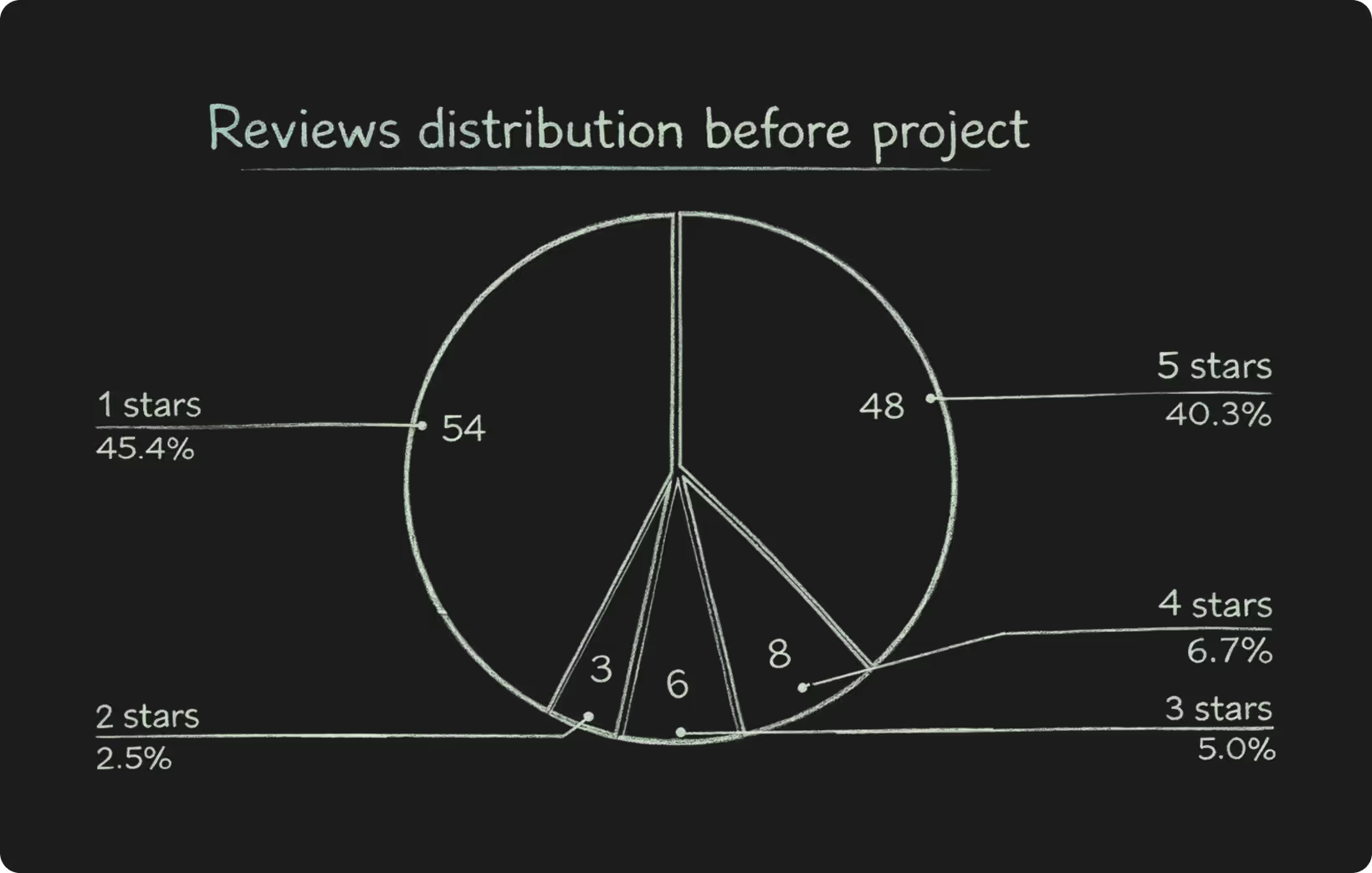
A long-established CFD broker approached PRpillar to start working systematically on its online reputation. At the beginning of the project, the company’s Trustpilot rating was 2.9 — a typical situation for the industry, where satisfied clients rarely leave reviews, while dissatisfied ones are far more motivated to do so.
This was the initial distribution of reviews:
Diagnosis: Profile Audit and Analysis of Past Activity
The company had already taken its first independent steps, and during the diagnostic phase we discovered that they had violated Trustpilot’s rules and received a Warning Letter.
A month prior to contacting us, they had started inviting clients to leave reviews using unauthorized methods, meaning approaches where the platform can’t verify that the review was left by a real customer.
For example, sending clients a link to the public Trustpilot profile and asking them to leave a review is a direct violation of the platform’s policies. This is precisely what led to the warning.
Fortunately, we did not identify any other critical issues. However, it became clear that the company was barely using the capabilities included in its paid Trustpilot plan.
Step 1. Putting the Page Design in Order
Few people realize that Trustpilot’s paid plans offer a wide range of tools for improving a brand’s page visually. We:
- added a branded banner at the top of the page,
- wrote a structured, conversion-oriented company description,
- placed clickable CTA buttons above the reviews section,
- disabled the built-in competitor carousel, which by default takes up a significant portion of the screen.
We won’t list every single optimization, but the core principle is simple: before directing real customers to your page, make sure it looks credible and truly reflects your brand values.
We aligned the client’s Trustpilot profile with their brand identity and turned it into a strong trust-building asset.
Step 2. Setting Up Proper Customer Invitations
Trustpilot offers several authorized methods for inviting customers to leave reviews. In all cases, the customer receives an invitation email either directly from Trustpilot or from the company’s corporate email address.
We recommended starting with manual invitations — a method where the company uploads a list of customer email addresses, and Trustpilot sends out the invitations automatically.
Before launch, we:
- adjusted profile settings,
- changed the reminder sending intervals,
- ensured the email template matched the company’s tone of voice.
The company uploaded its first customer list and began receiving reviews.
Conversion rates for manual uploads are typically low — from under 1% to around 2–3%, which is considered normal.
Manual invitations can only be used during the first 90 days. This period is intended to collect reviews from customers who interacted with the brand before the launch of a systematic reputation campaign. Therefore, in parallel, we began implementing Step 3.
Step 3. Optimizing a Continuous Automated Invitation Flow
Together with the client, we identified the most suitable trigger within their business processes to initiate review invitations. A trigger must be tied to a real customer interaction, such as:
- making the first deposit,
- submitting a withdrawal request,
- successfully completing verification,
- creating a support ticket — provided it is resolved properly.
The key is to avoid events that are inherently linked only to loyal customers, as Trustpilot may interpret this as manipulation.
We recommended using the AFS method, which is the easiest to implement technically. It requires adding a unique Trustpilot email address in BCC to the customer email sent at the chosen trigger point. Each time the trigger occurs, Trustpilot automatically sends a review invitation.
We tested multiple triggers and email templates to ensure full compliance with the platform’s policies.
Results
Within the first three months:
⭐ The rating increased from 2.9 to 4.5
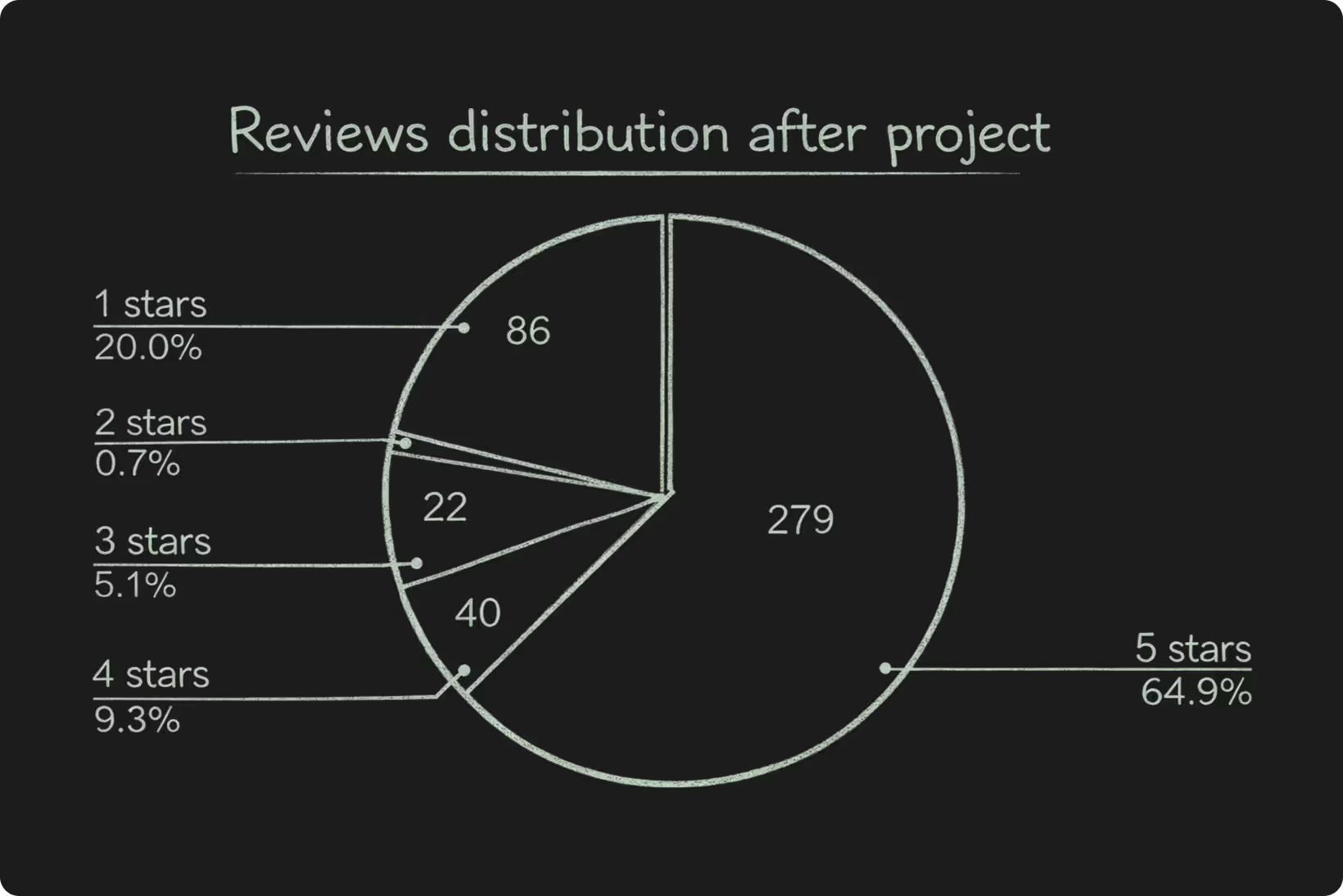
📝 The number of reviews grew from 119 to 430
📈 The average conversion rate reached 1.37%
It’s important to note that results always vary depending on the product, audience, customer journey, and other factors. The final star-rating distribution looked as follows:
Don’t Be Afraid of Your Customers — Give Them a Chance to Speak
We often encounter the same fear: companies expect that if they ask customers to leave a review, they will receive only negative feedback.
Yes, some negative reviews are inevitable — and that’s a normal part of the process. But in our experience, if the product is truly solid, positive feedback will always outweigh the negative.