The Brand
Our partner is a CFD brokerage operating in a crowded, reputation-sensitive industry. The brand had an active online presence and an established client base — but YouTube was a blind spot. YouTube had been largely overlooked — and that gap was showing up in search results in a way that was hard to ignore.
The Problem: Losing the YouTube SERP to Noise and Negativity
When potential clients searched for the broker on YouTube — checking reviews, looking for trading tutorials, validating the brand — the results were out of the broker's control:
Irrelevant videos from unrelated channels appeared for branded queries
Negative content ranked alongside the official channel, creating a misleading first impression
No systematic presence — the broker had no consistent content strategy to fill and own the space
In a regulated, trust-dependent industry like CFD trading, what a trader finds on YouTube when they search your name matters. It can be the difference between a sign-up and a lost lead.
What We Did: 29 Videos in 60 Days
The Production Approach
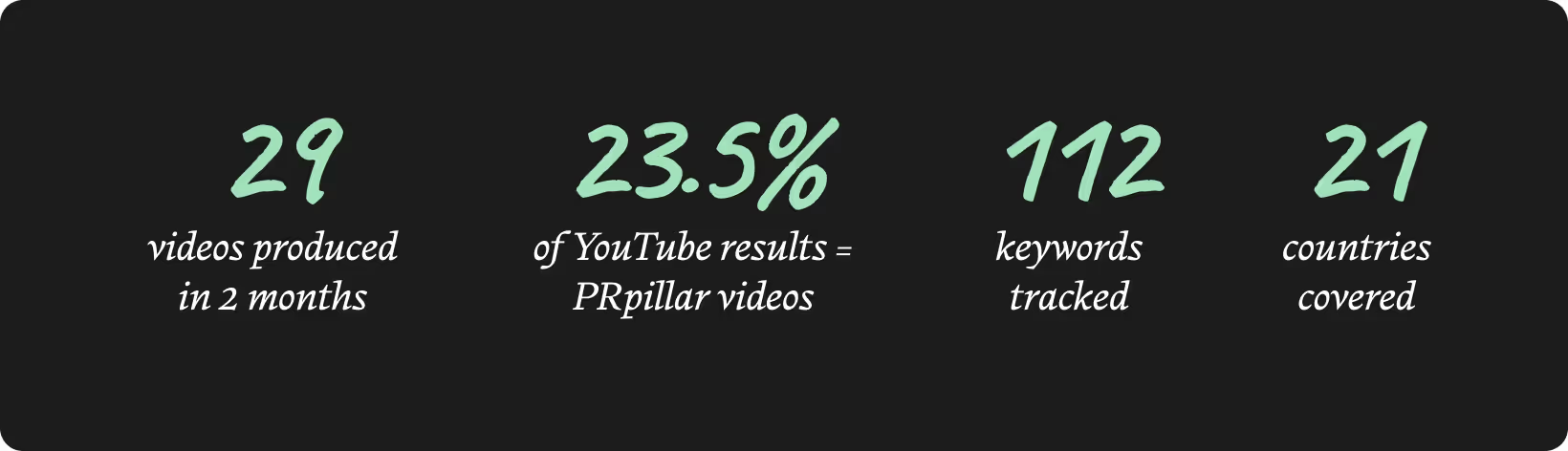
We produced 29 videos between January and February 2026 — a mix of standard-format content and Shorts. Video production was powered by AI tools to maintain speed and scale, but every script was written by our content team: specialists who understand trading, CFD regulation, and the language of the industry.
This matters. AI-generated visuals with generic scripts wouldn't have worked. The depth of the content — the trading-specific terminology, the accurate framing of the broker's value proposition — is what made the videos rank and resonate.
Keyword Strategy: Built on Existing ORM Data
We didn't guess at keywords. We pulled directly from the 112 keywords we already track as part of the broader ORM project with this partner. These are the exact terms traders use when checking a broker's reputation: brand name variations, brand + "review", brand + "legit", and similar reputation-verification queries.
Every video title and description was required to include the target keyword — one of the strongest on-page signals YouTube uses to understand what a video is about.
Multilingual from Day One
The broker operates globally, so the content strategy had to match. Videos were published in six languages across the 21 tracked countries:
English — core volume, highest keyword competition
Japanese, Spanish, Thai, Vietnamese — key regional markets
Chinese (ZHO), Arabic — additional covered regions
This multilingual approach is what pushed the coverage to 21 countries — and reflects how modern ORM works: reputation isn't just an English-language problem.
The Results
1. YouTube Search Visibility
We analyzed the TOP 10 YouTube results for each tracked keyword in each country as of early March 2026. Here's what we found:
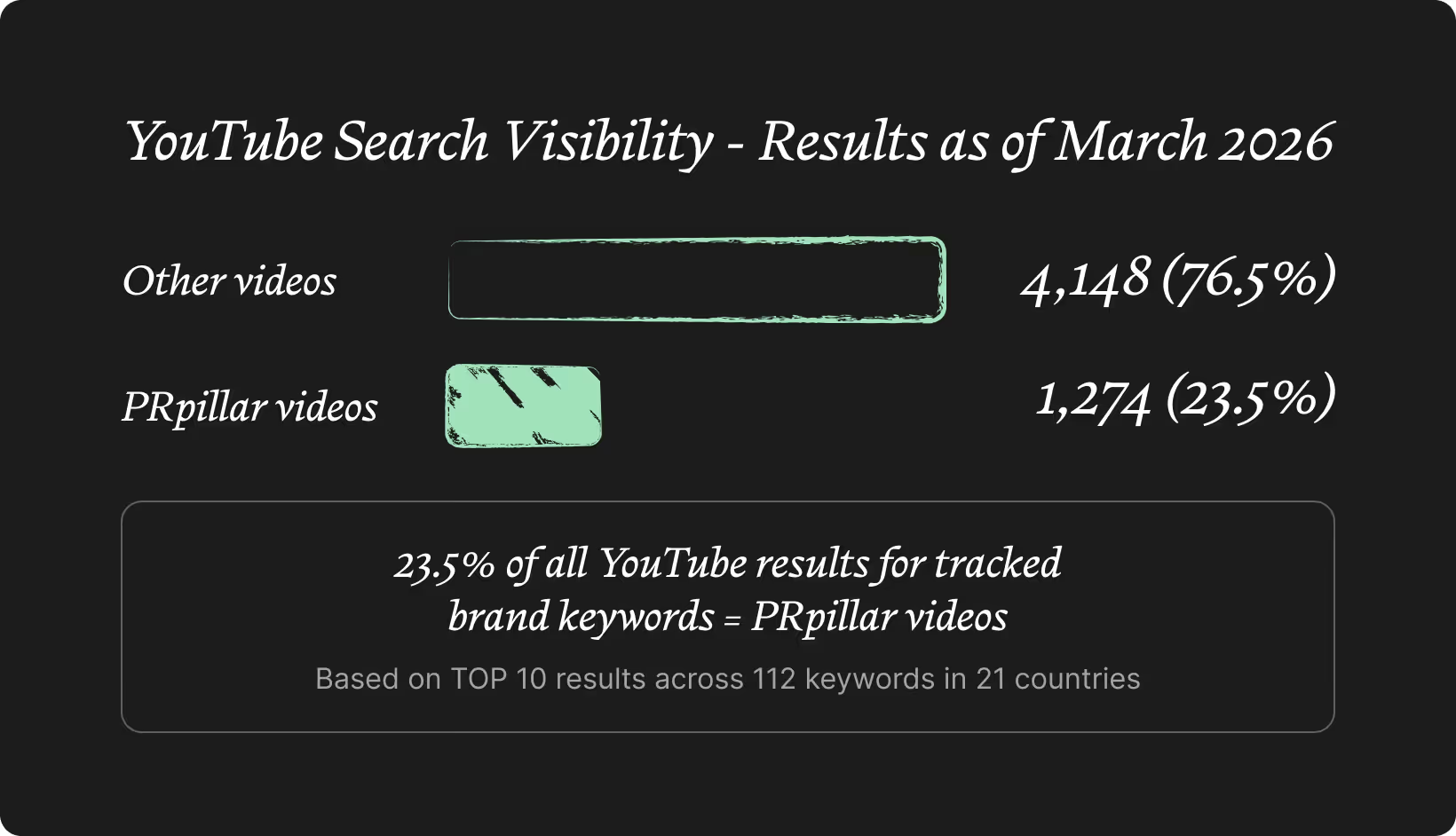
Out of 5,422 total video appearances tracked across all keyword-country combinations, 1,274 — nearly one in four — were PRpillar videos. In just two months, we went from zero presence to owning a significant portion of the YouTube SERP for branded queries.
2. Consistent Presence Across All Positions
One thing worth highlighting: our videos didn't just cluster at position #1 or disappear after the top spot. They appeared consistently across all 10 positions in the YouTube search results — meaning users searching for the brand would encounter our content no matter how far down the page they scrolled.
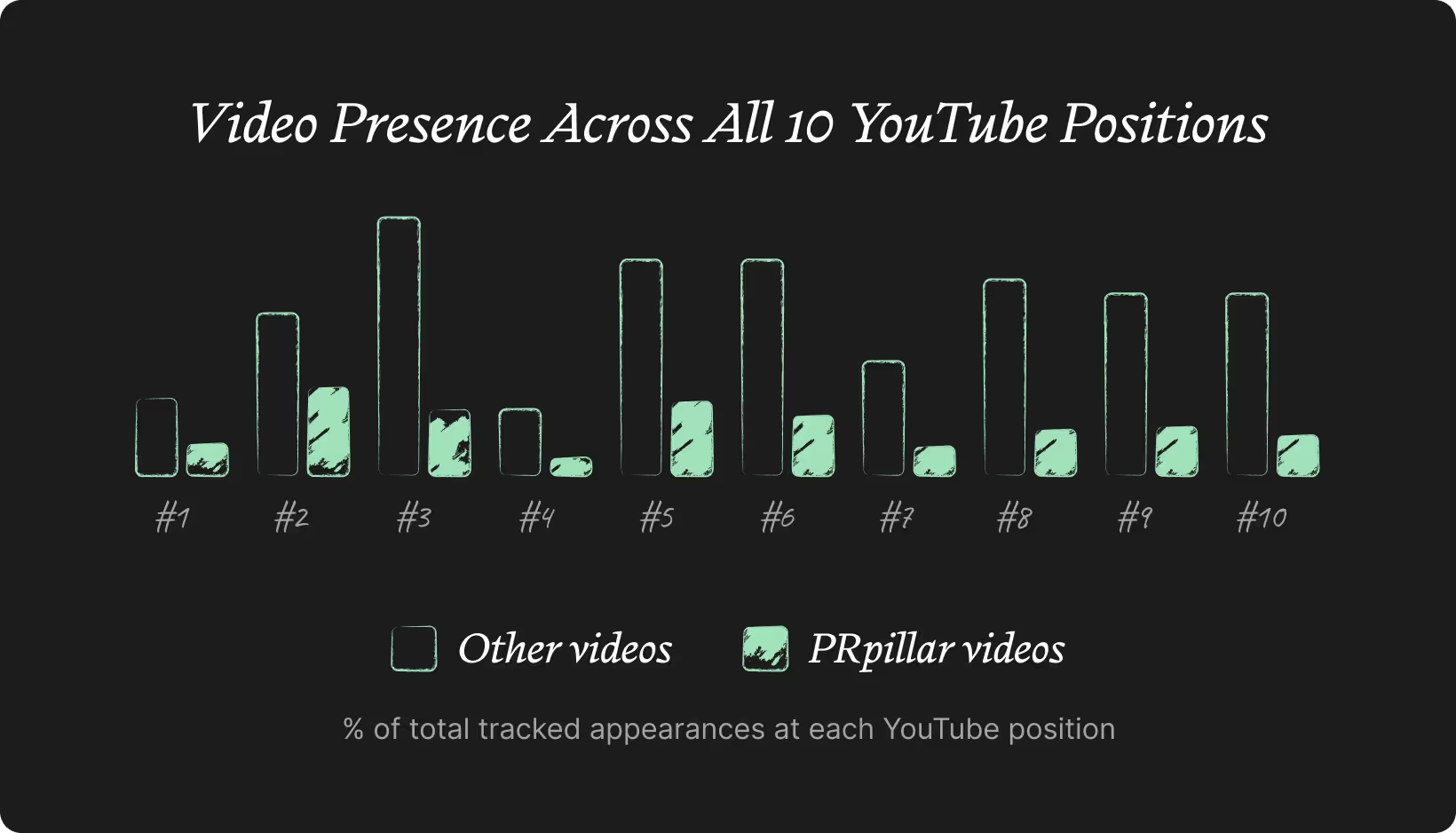
This distribution matters for reputation management. A single top-ranked video is easy to displace. A presence spread across the entire first page is structural. It's much harder for negative or irrelevant content to break through when there are multiple owned results already holding positions.
3. Per-Video Breakdown
The distribution of appearances wasn't equal across all 29 videos — and that's expected. English-language videos drove the bulk of the volume, while non-English content contributed lower but meaningful coverage in their respective regional markets:
The standout: Video 3 (English, standard format) appeared 343 times — accounting for 6.3% of all tracked YouTube results on its own. Videos 5, 1, and 7 also broke through with 189, 161, and 152 appearances respectively.
Non-English videos showed lower raw numbers, which reflects both the smaller search volumes in those markets and the fact that some languages (ZHO in particular) proved harder to rank in. These are learnings we can now act on.
Bonus: The Videos Started Appearing in AI Answers
As part of our standard ORM tracking, we also tested whether these videos were being cited by LLMs in response to reputation-focused prompts — queries like "Is [broker] legit?" or "What are reviews of [broker]?".
The results were a bonus, not a primary goal of this campaign:
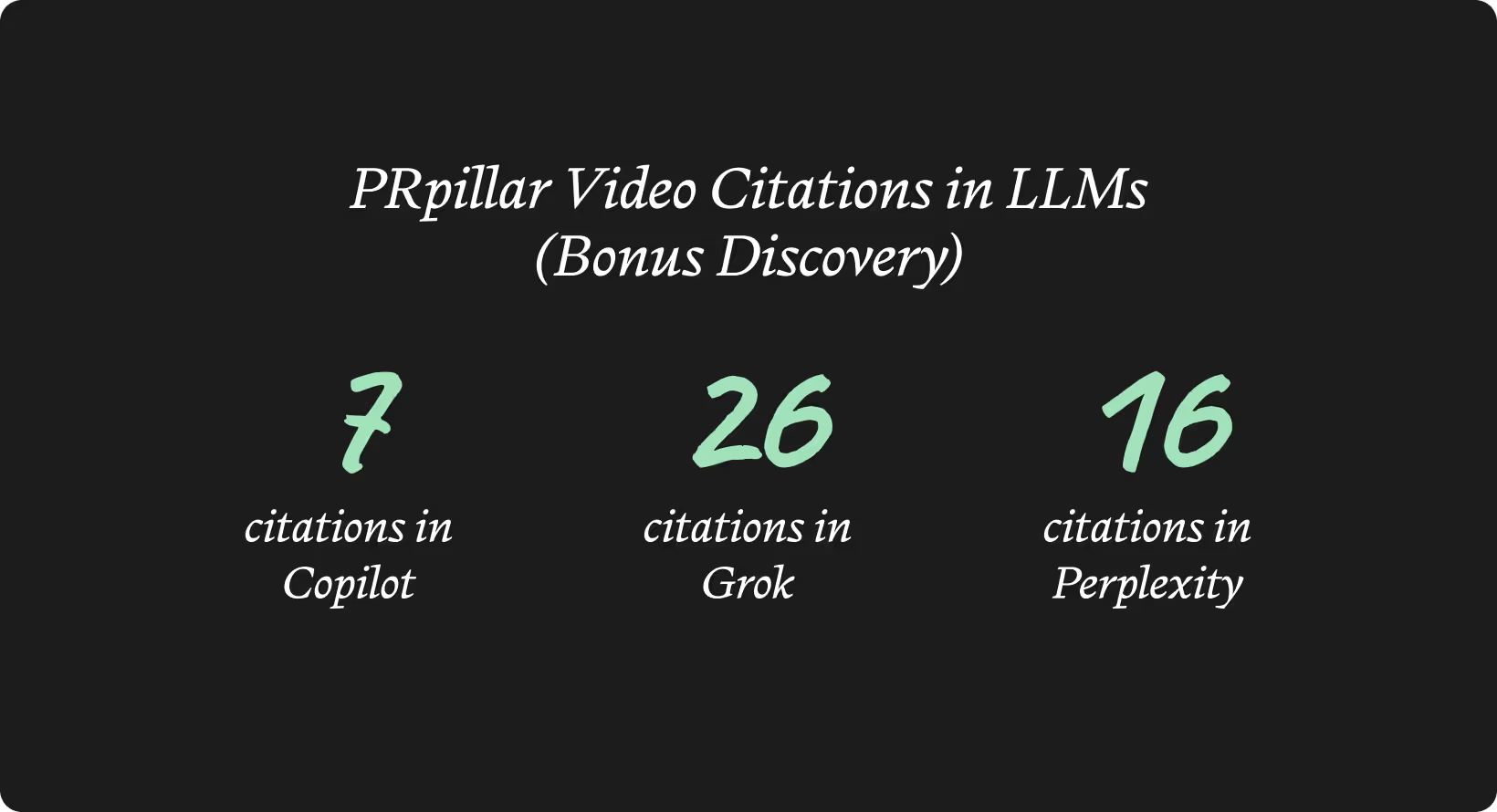
Three LLMs cited our videos: Copilot (7 citations), Grok (26 citations), and Perplexity (16 citations). Claude, ChatGPT, DeepSeek, Gemini, and Google AI Mode returned zero citations for our videos.
This isn't surprising — each LLM uses its own criteria for surfacing video content, and video is generally less cited in AI answers than text-based sources. But the fact that three major models are already picking up this content, without any AEO-specific optimisation for video, suggests real potential here as LLMs increasingly pull from multimedia sources.
We also observed the videos appearing in Google Search results: 24 appearances in the TOP 10 and 23 in the TOP 20 across 14,898 tracked link positions. The percentage is small at this scale, but it confirms the content has cross-channel indexation value — not just YouTube visibility.
The Bottom Line
YouTube reputation management is an underused lever in ORM — and this case shows why that's a mistake. In two months, with a focused production sprint and a keyword strategy built on real ORM data, we shifted the YouTube search landscape for a CFD broker from uncontrolled to substantially owned.
23.5% of all YouTube search results for tracked brand keywords. 29 videos. 21 countries. 112 keywords. And the results are only going to compound as the videos continue to age and accumulate watch time.
If your brand's YouTube presence is being shaped by content you didn't create, that's not a content problem — it's a strategy problem. And it's solvable.